Fundraising
The thank-you note is a campaign tool
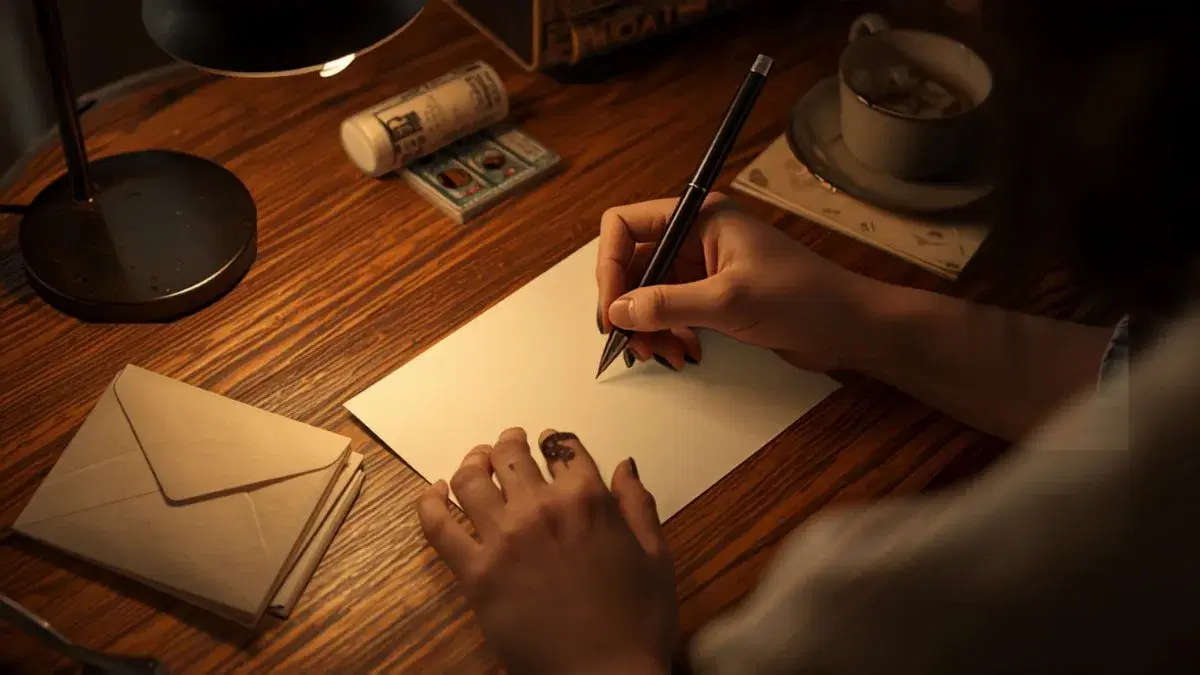
Photo: generated for CampaignLogix
How quickly should a campaign thank its donors?
Send a thank-you within 48 hours of every contribution, and make it personal enough that the donor can tell a human wrote it. Donors who are thanked promptly are substantially more likely to give a second time, and the second gift is the one that funds a local campaign — most small-dollar donors will give again if asked, and almost none will if they were never acknowledged.
Ask a first-time candidate about fundraising and you will hear about the ask — how uncomfortable it is, how to phrase it, how to get through the call list. Almost nobody asks about the part that comes after the money arrives, which is where most of the value in a small-dollar donor base is created or destroyed.
A local campaign is not funded by first gifts. It is funded by second and third gifts from the eighty people who already believe in you. Those repeat gifts are earned in the 48 hours after the first one.
Why the thank-you does so much work
A contribution to a school board candidate is not an investment decision. It is a social act — a person deciding to be publicly, financially on your side. What they want in return is confirmation that it registered.
When it does not register, the donor draws a reasonable conclusion: the money vanished into a machine, nobody noticed, and there is no particular reason to do it again. When it does register — quickly, warmly, specifically — you have converted a transaction into a relationship, and relationships can be asked a second time.
The 48-hour rule
Two days is the window. Same day is better. Past a week, the note reads as an administrative afterthought no matter how nicely it is written, because the donor has already concluded you were not going to.
Forty-eight hours is achievable for exactly one reason: you are not writing from scratch. You are filling in a structure you built in advance, in about twenty minutes, back in the summer.
A thank-you that takes ninety seconds
Four sentences. That is the whole format, and it works in a card, an email, or a text.
- The specific thanks. "Thank you for the $50 — it came in Tuesday." Naming the amount proves a person looked at it.
- What it buys. "That covers the walk lists for two precincts." Small campaigns have the enormous advantage that gifts map to concrete things. Use it.
- One line that could only be for them. "Still thinking about what you said about the crosswalk at Pine and 3rd." This is the sentence that does the work.
- A forward-looking close. "I'll let you know how the Ward 3 canvass goes." It sets up the next contact so the second ask is not cold.
No mission statement, no policy platform, no second ask. A thank-you that contains an ask is not a thank-you, and donors notice instantly.
Handwritten, email, or text?
- Handwritten card: gifts above roughly $100, anyone who gave in person, and every single first-time donor you know personally. Slow, expensive, and disproportionately effective — people keep these.
- Email: the workhorse for online gifts under $100. Send it from your own address, not a no-reply. Replies to thank-you emails are one of the better sources of volunteer leads you will find.
- Text: only for donors who gave by text or who you already text. It reads as intimate from a friend and intrusive from a stranger.
- Phone call: for major gifts by your race's standards. In a school board race that might be $250. Call, do not leave the ask hanging, just say thank you and get off.
Building the system before you need it
The reason thank-yous slip is never that the candidate does not care. It is that the gift arrives on a Wednesday during a workday, gets mentally filed under "this weekend," and by the weekend there are six of them and no list.
Three things prevent that, and all three can be set up in an afternoon:
- One ledger, updated the day money arrives. Every gift, with date received and date thanked as separate columns. The gap between those two columns is the only fundraising metric you need to watch weekly.
- A standing appointment. Twenty minutes, twice a week, on the calendar, non-negotiable. Tuesday and Friday evenings work well. Two sittings a week guarantees nothing waits longer than 72 hours.
- Cards and stamps already bought. Stamps in a drawer are the difference between a card written and a card intended.
Delegate the tracking, not the writing
A volunteer can absolutely maintain the ledger, stuff and stamp the envelopes, flag who is overdue, and hand you a stack of pre-addressed cards. That is most of the labor.
What cannot be delegated is the third sentence — the one that could only be for that person. That has to come from you, because it is the only part the donor is actually checking for. Ten cards with one genuine line each beat a hundred with none.
The second ask
Six to eight weeks after a first gift, go back. Not with a form letter — with a follow-up to the specific thing you told them their money would buy. "You paid for the Ward 3 walk lists. We finished the ward last Saturday, 340 doors. Here is what we heard. We're doing Ward 5 next, and I need $50 to print it."
That message only works if the thank-you happened. It is the entire return on those twenty minutes twice a week — and in a race funded by neighbors rather than committees, it is very often the difference between a campaign that runs out of money in October and one that does not.
Run your race with the tools the big campaigns use
See every registered voter in your district, organize volunteers, and track donations — free until you activate.